
Key Takeaways
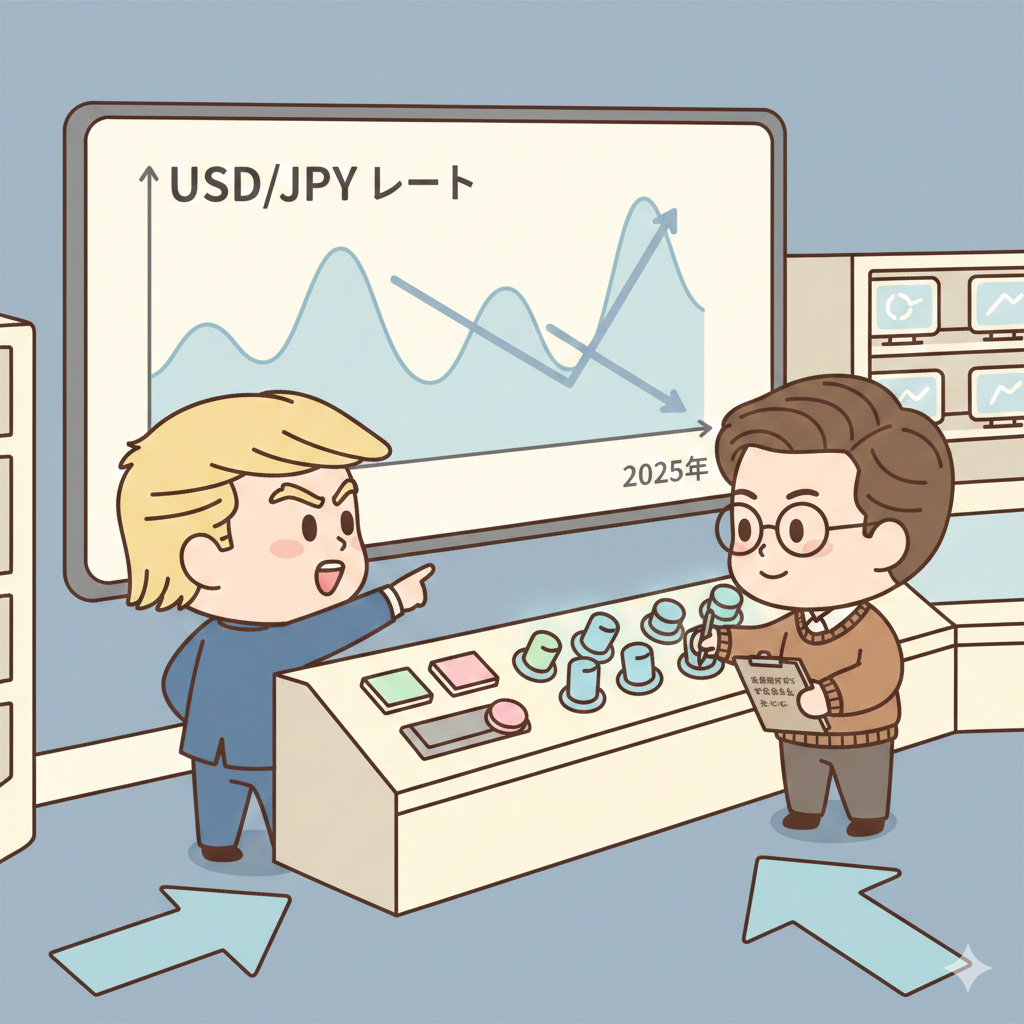
The Trump-Bessent “good-cop/bad-cop” reading is treated as a hypothesis with falsification conditions, not a market call.
Three scenarios defined: (A) Coordination is working; (B) Coordination exists but execution fails; (C) No coordination, genuine policy disagreement.
Monitoring points established: DXY, USDJPY IV, Treasury auction data, TIC foreign holdings, official document vs. public statement tension.
Falsification conditions clear: Official language shift, public Trump-Bessent conflict, or Bessent exit would invalidate the coordination hypothesis.
Framework value: Not about guessing intent correctly. It’s about knowing what to adjust when new information arrives.
Risk Framework Statement
This memo presents a scenario-based risk monitoring framework. It is not investment advice.
The probability estimates below are subjective, derived from public information, and will be updated as new data emerges. Any description of “policy intent” is a market interpretation hypothesis, not a statement of fact. This memo does not presume to know the true intentions of any government official.
Framing
The market offers one interpretation: Trump and Treasury Secretary Scott Bessent are running a coordinated good-cop/bad-cop routine. This memo treats that interpretation as a testable hypothesis. It provides three scenarios, probability ranges, and falsification conditions.
Even if the coordination hypothesis holds, Fed policy independence and capital flows could push the dollar off its expected trajectory. “Coordination” does not equal “control.” Official documents still maintain the “strong dollar / market-determined” framework. The tension between official statements and public remarks is itself a monitoring point.
Watch list:
DXY and volatility indicators (USDJPY IV, cross-currency basis)
Treasury market signals (10Y TIPS, TIC holdings, auction data)
Official signal tension (documents vs. public remarks)
Policy noise (tariff news frequency, deadline events)
Coordination breakdown (public conflicts, personnel rumors)
If official document language shifts fundamentally (from “market-determined” to an explicit FX stance), or if Trump and Bessent show public policy conflict, the entire framework needs reassessment.
Section I: Recent Events and Market Reaction
On January 27, 2026, Trump was asked about recent dollar moves in Iowa. He said: “I think it’s great.” He also brought up China and Japan’s past currency policies. [1][2]
Financial Times and AP reported that the ICE Dollar Index dropped significantly that day. [1][2]
This contrasts with Bessent’s earlier public statements. He had said: “The strong dollar policy remains fully intact under President Trump.” [4]
On the surface, these statements look contradictory. But the market has another reading: this might be deliberate good-cop/bad-cop coordination.
I don’t know if that reading is correct. I cannot verify it.
What we can do is treat this “coordination hypothesis” as a testable framework. Set probability ranges. List falsification conditions. Build monitoring indicators. When new information arrives, we know how to adjust.
This memo has no inside information. It is simply a risk monitoring tool.
Section II: Tariff News Background
The recent dollar comments occurred against a backdrop of intense tariff-related news.
The following comes from verifiable public reporting.
On Canada: Trump threatened high tariffs on Canadian goods, linked to Canada’s trade agreement with China. [5]
Tariff rhetoric escalating across multiple countries: In the week leading into January 27, tariff-related statements or reports targeted South Korea, the EU, and others. [6][7]
Against this backdrop, Bessent has defended “strategic uncertainty,” stating that “giving too much certainty in negotiations gets exploited by the other side.” [8]
Some market participants interpret this as: the more tariff news emerges, the more likely the market will read public statements through a “negotiation pressure” lens.
But this interpretation currently hits two walls.
First, the Treasury’s official readout still reaffirms that “exchange rates should be market-determined.” [9]
Second, Bessent’s public statements still maintain that “strong dollar policy remains fully intact.” [4]
The tension between these two is exactly what we need to monitor.
Section III: Why Use a Hypothesis Framework?
Over the past few months, Trump has repeatedly criticized dollar strength, hinted at currency manipulation by other countries, and demanded Fed rate cuts. Meanwhile, Treasury Secretary Bessent has repeatedly emphasized the dollar’s reserve currency status, Fed independence, and “strong dollar policy unchanged.”
If you only listen to Trump, you’d think U.S. dollar policy is changing. If you only listen to Bessent, you’d think everything is business as usual.
Some market participants have another interpretation: this is a division of labor. Under this framework, Trump’s statements create strategic uncertainty. Bessent’s statements provide the buffer. Read this way, market volatility from these public remarks would not signal fundamental policy change.
If this interpretation is correct, then recent dollar moves can be treated as volatility within the Trump playbook. Bessent should have follow-up public statements. Dollar weakness might moderate.
If this interpretation is wrong, two possibilities remain. One: Trump and Bessent genuinely disagree. Two: coordination intent exists but execution failed and the market isn’t buying it.
We cannot know which is true. But we can set conditions: under what circumstances would we raise one scenario’s probability, under what circumstances would we lower it?
That’s the value of a hypothesis framework. Not about guessing right. About knowing how to adjust.
Section IV: Three Scenarios and Probability Ranges
⚠️ Parameter Disclaimer: All probability figures and threshold values (standard deviations, trading days, percentages) below are illustrative. They explain the framework logic. Do not copy them directly as trading rules. Readers should adjust based on their own risk management systems and market judgment.
I divide the possible states of dollar policy communication into three scenarios.
Scenario A: Coordination is Working, Market Treats Volatility as Noise
Probability: High
This scenario assumes Trump and Bessent’s public statements reflect deliberate coordination, and execution has been effective so far.
Under this framework, Trump’s statements create strategic uncertainty. Bessent’s statements provide the buffer. If the market adopts this reading, volatility does not signal fundamental policy change.
From recent price action, the market may be trading the “negotiation pressure” playbook in the short term. But other factors could also explain the moves (rate expectations, positioning, etc.).
This scenario assumes: the Fed maintains policy independence, no capital flight acceleration, 10Y real rates stay in a reasonable range, official documents maintain the “market-determined” framework.
Quantitative Threshold: If Bessent makes a public statement within 5 trading days (illustrative) after the event, and the deviation of USDJPY 1M ATM IV from its 60-day average stays within 1 standard deviation, Scenario A holds. If IV rises more than 1.5 standard deviations above the average and persists for 3+ trading days, Scenario A probability gets downgraded.
Under this playbook, for those with dollar exposure, short-term volatility may increase but won’t spiral out of control. Maintain exposure, but closely track signals of risk escalation.
Scenario B: Coordination Exists but Execution Fails, Market Confidence Collapses
Probability: Medium
This scenario assumes coordination intent exists, but execution fails. Market confidence collapses faster than repair capacity.
The single-day drop hasn’t reached “out of control” territory yet. But if the dollar continues weakening, official statements fail to stop the slide, and 10Y real rates deteriorate simultaneously, those are early signals of Scenario B.
Another observation point: if tariff news escalates but the dollar strengthens instead, the market is trading “risk-off” rather than “negotiation pressure.” The coordination hypothesis would then need recalibration.
Quantitative Threshold: If Treasury auction bid-to-cover ratios or indirect bidder percentages deteriorate for 2 consecutive auctions, or TIC data shows foreign investors net selling Treasuries for 3 consecutive months, Scenario B probability gets upgraded.
This is the scenario where the market stops buying the coordination story. Dollar depreciation could accelerate. If you have significant dollar exposure, risk controls may need reassessment.
Scenario C: No Coordination, Internal Policy Disagreement Exists
Probability: Low
This scenario assumes Trump and Bessent genuinely disagree on policy. The “division of labor” the market sees is coincidence, or internal coordination is breaking down.
Recent events provide no new evidence for Scenario C. Trump’s statements are consistent with his historical positions. No signals of public conflict with Bessent have emerged.
Quantitative Threshold: If 2 or more instances of policy message reversals, delays, or official statements contradicting each other occur within a month, Scenario C probability gets upgraded. If Bessent resigns or is removed, Scenario C is confirmed.
Under this playbook, dollar direction depends on “who wins.” Highest uncertainty scenario. Exposure risk controls need to be more conservative.
Section V: Quick Reference: Operating Rules Card
The following conditional update rules are for explaining framework logic only. They are not trading rules to copy directly. All thresholds are illustrative.
Rule 1: Official Document Language Changes If you see a Treasury readout or official statement shift from “market-determined” to an explicit FX stance → Invalidate Scenario A immediately, reassess the entire framework
Rule 2: Public Policy Conflict If Trump publicly criticizes Bessent, or Bessent resigns/is removed → Invalidate Scenario A immediately, confirm Scenario C or significantly upgrade its probability
Rule 3: Volatility Anomaly If USDJPY 1M ATM IV rises more than 1.5σ above its 60-day average and persists for 3+ trading days → Downgrade Scenario A probability, upgrade Scenario B probability
Rule 4: Treasury Market Deterioration If Treasury auction bid-to-cover or indirect bidder percentages deteriorate for 2 consecutive auctions → Upgrade Scenario B probability
Rule 5: Capital Flow Reversal If TIC data shows foreign investors net selling Treasuries for 3 consecutive months → Upgrade Scenario B probability
Rule 6: Tariff Escalation but Dollar Strengthens If tariff news escalates but DXY strengthens and real rates rise → Market is trading “risk-off,” not “negotiation pressure.” Coordination hypothesis needs recalibration
Section VI: Evidence Grading
Not all information carries equal weight. I classify evidence into three tiers.
Tier A is hard evidence. Policy documents, official decisions, actual market data. Examples: U.S. Treasury official readouts, Fed FOMC decisions, TIC data, Treasury auction data, ICE Dollar Index closing prices. Highest weight. Can directly adjust probability ranges.
Tier B is medium evidence. Interview transcripts with traceable original sources, mainstream media reports. Examples: Trump’s Iowa public comments (FT, AP, CNBC), Bessent’s Bloomberg/PBS interviews. These have original sources and can be cited. Second-highest weight.
Tier C is soft evidence. Media adjectives, faction labels, social media commentary. These serve as background only. Not evidence for arguments. I do not use these to adjust probabilities.
Section VII: Falsification Conditions
The following thresholds are illustrative.
Each scenario has observable falsification conditions. When triggered, I adjust probabilities.
Scenario A Falsification Conditions:
If Bessent stays silent for more than 5 trading days after an event, with no public statements, Scenario A probability drops 5-10 percentage points.
If official document language fundamentally changes (Treasury readout or official statement shifts from “market-determined” to explicit FX stance), Scenario A is immediately invalidated.
If the Fed explicitly states it won’t cooperate with the executive branch’s economic goals, Scenario A probability drops.
If Trump publicly criticizes Bessent, Scenario A is immediately invalidated.
Scenario B Trigger Conditions:
If the dollar drops another 3%+ from pre-event close over the next 5 trading days, and official statements fail to stop the slide, Scenario B probability is upgraded.
If Treasury auction bid-to-cover ratio or indirect bidder percentage deteriorates for 2 consecutive auctions, Scenario B probability is upgraded.
If TIC data shows foreign investors net selling Treasuries for 3 consecutive months, Scenario B probability is upgraded.
Key verification: if tariff news escalates but DXY strengthens and real rates rise, the market is trading “risk-off.” The coordination hypothesis needs recalibration.
Scenario C Trigger Conditions:
If 2 or more instances of policy message reversals, delays, or contradicting official statements occur within a month, Scenario C probability is upgraded.
If Bessent resigns or is removed, Scenario C is confirmed.
If credible reporting (named sources in mainstream media) emerges of White House internal policy conflict, Scenario C probability is upgraded.
Section VIII: Monitoring Dashboard
All thresholds below are illustrative.
Over the next 3 to 6 months, I will track the following indicators.
ICE Dollar Index (DXY): Focus on deviation from the 60-day average. If deviation exceeds 1.5 standard deviations and persists for 3+ trading days, treat as significant movement.
10Y Real Rates (TIPS Yield): Focus on whether sustained deterioration occurs. If real rates fall while nominal rates stay flat or rise, inflation expectations are increasing.
TIC Data (Foreign Treasury Holdings): Focus on whether outflows accelerate. Monthly data, lagged about 6 weeks. Three consecutive months of net selling is a warning sign.
Treasury Auction Data: Focus on bid-to-cover ratio and indirect bidder percentage. Two consecutive deteriorations is a warning sign. (Use Treasury Department published data.)
USDJPY Implied Volatility (1M/3M ATM): Focus on hedging cost changes. Risk isn’t just about direction. It’s also about hedging cost. If 1M ATM IV rises more than 1.5 standard deviations above its 60-day average, the market is pricing significantly higher uncertainty.
Cross-Currency Basis (USDJPY Basis): Focus on dollar liquidity pressure. If basis widens sharply, dollar liquidity may be under stress.
Tariff News Frequency (Trade Pressure Index): Focus on count of “new/escalated tariff threats” over the past 30 days, plus “deadline-setting” events. Note: TPI referenced here is a self-constructed indicator based on subjective counting of public news. It is not an official indicator. For internal framework use only.
Market verification logic: if tariff news escalates, the dollar could take two paths. Path one: market trades “negotiation pressure,” dollar weakens. Path two: market trades “risk-off,” dollar strengthens. Observe actual price reaction to determine which playbook the market is using.
Official Statements and Documents: Focus on whether official documents (Treasury readouts, official statements) still maintain the “market-determined” framework. Whether public statements (Trump, Bessent) show tone shifts. Whether tension between the two is expanding.
Section IX: Recent Events Framework Reading
Applying this framework to recent events.
Facts: According to Financial Times and AP, the ICE Dollar Index dropped significantly on January 27. Trump publicly expressed a positive view of dollar weakness. This occurred against a backdrop of dense tariff-related news targeting multiple countries.
Impact on Three Scenarios:
On Scenario A (Coordination Working): recent events do not change Scenario A’s probability by themselves. Some market participants may trade this as volatility “within the narrative,” but other factors could also explain the moves. The key is subsequent official statements and whether official documents maintain the “market-determined” framework. If Bessent makes a public statement within the next 5 trading days with tone consistent with past remarks, Scenario A’s weight holds. If he stays silent for more than 5 trading days, weight is downgraded.
On Scenario B (Coordination Fails): the single-day drop hasn’t reached “out of control” territory. But this is an early observation point. If the dollar continues weakening for multiple days, official statements fail to stop the slide, and 10Y real rates deteriorate simultaneously, Scenario B’s weight needs upgrading.
On Scenario C (No Coordination): recent events provide no new evidence for Scenario C. Trump’s statements are consistent with his historical positions. No signals of public conflict with Bessent have emerged.
This section describes market reaction and how the framework maps to it. It does not presume any policy intent.
Next Steps to Watch:
Does Bessent make a public statement this week? Is the tone consistent with past remarks?
How does the dollar perform over subsequent trading days?
Any anomalies in USDJPY IV or cross-currency basis?
Any Treasury auctions coming up? How is subscription demand?
Does the next Treasury official statement maintain the “market-determined” framework?
Section X: Framework Limitations
This framework has four fundamental limitations.
First, we don’t know true intent. We can only observe public behavior, then infer. If Trump and Bessent are “coordinating” through private channels, no one can verify it.
Second, even if coordination exists, external factors could break it. Fed non-cooperation, capital flow reversal, or a geopolitical shock could turn “controlled” into “out of control.”
Third, market narratives can self-fulfill. If enough people trade a story, their actions move prices, which in turn strengthen or weaken that story.
Fourth, “market trades a story” does not equal “that story is fact.” Dollar weakness might be traded by some as “negotiation pressure,” but the actual driver could be completely different (rate expectations, positioning, etc.).
So this framework’s value is not in “guessing intent correctly.” Its value is in letting us know: when something happens, what to adjust.
References
[1] Financial Times, “Dollar slides as Trump says he is not concerned with its recent decline”, 2026/01 https://www.ft.com/content/04c785c0-9ca4-4a85-a279-d95c9d8f1f80
[2] AP News, “Wall Street sets a record while the US dollar’s value slides again”, 2026/01 https://apnews.com/article/9490a04190f0cb649966b3b8d7724bef
[3] CNBC, “Dollar suffers worst one-day slide since last April after Trump says currency hasn’t fallen too low”, 2026/01 https://www.cnbc.com/2026/01/27/dollar-slides-trump-weak-currency.html
[4] Yahoo Finance / Bloomberg, “Bessent Says Strong Dollar Policy Remains Intact Under Trump”, 2025/02 https://finance.yahoo.com/news/bessent-says-strong-dollar-policy-185449337.html
[5] AP News, “Trump threatens Canada with a 100% tariff over its China trade deal”, 2026/01 https://apnews.com/article/trump-canada-carney-china-tariffs-5079e910df071b45d2b16949efb8f11a
[6] MarketWatch, “South Korean auto, pharma stocks fall after Trump threatens tariffs”, 2026/01 https://www.marketwatch.com/story/south-korean-auto-pharma-stocks-fall-after-trump-threatens-to-impose-25-tariffs-14d1b950
[7] The Guardian, “EU parliament blocks US trade deal after Trump’s tariff threat”, 2026/01 https://www.theguardian.com/world/2026/jan/21/eu-parliament-blocks-us-trade-deal-trump-tariff-threat
[8] PBS, “Bessent defends Trump’s ‘strategic uncertainty’”, 2025/01 https://www.pbs.org/newshour/politics/watch-bessent-defends-trumps-strategic-uncertainty-says-certainty-not-necessarily-a-good-thing-in-negotiating
[9] U.S. Department of the Treasury, “Readout from Secretary Bessent’s Meeting”, 2025/01 https://home.treasury.gov/news/press-releases/sb0147
Disclaimer This memo is for educational discussion and internal-style research notes. It is not investment, legal, or tax advice. Rules and tax regimes change, and outcomes depend on individual facts and jurisdiction. Consult qualified professionals before implementing leverage or tax planning.
Kuan, Founder of Miyama Capital