
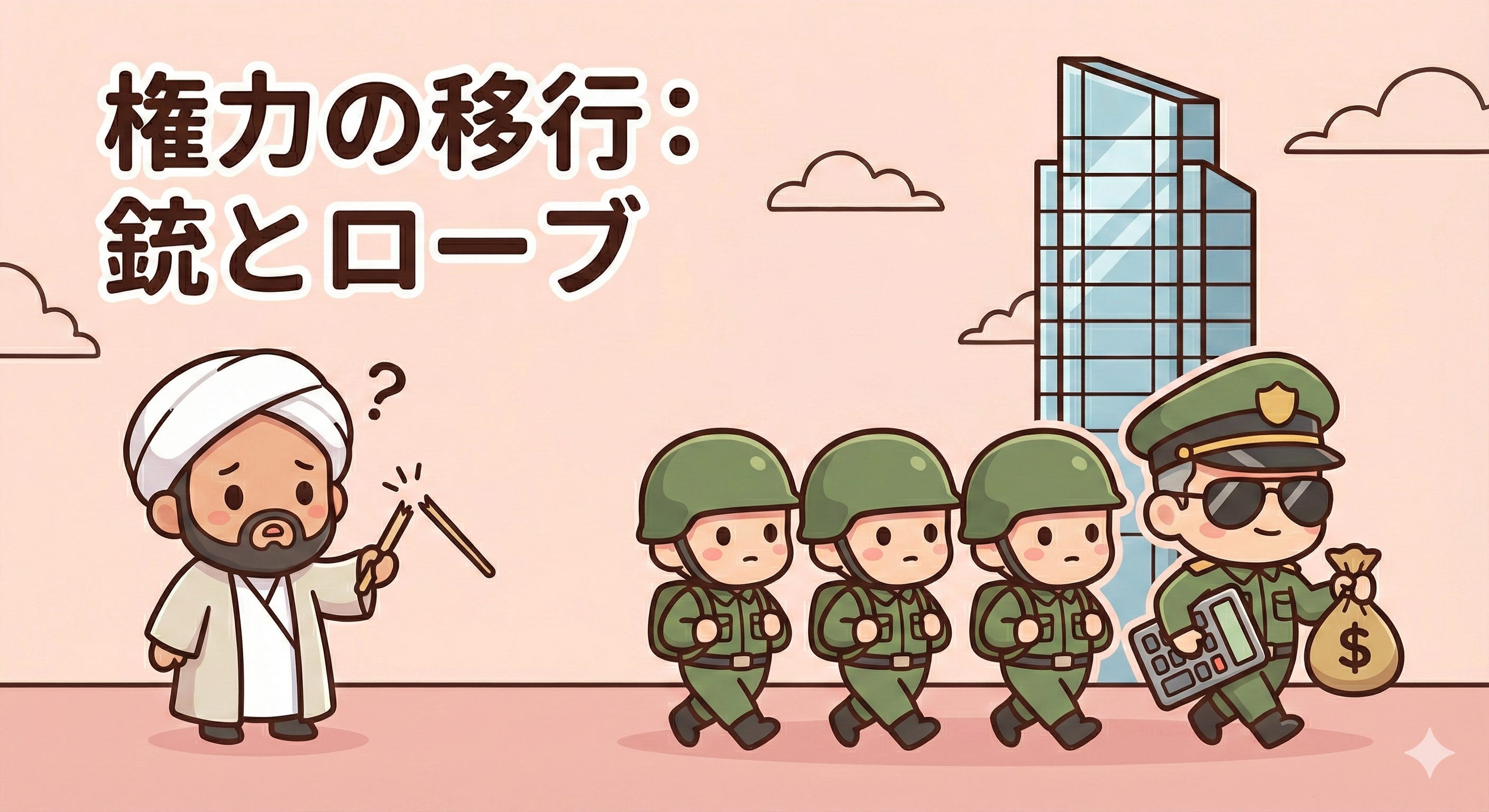
As headlines fixate on whether the U.S. will launch a ground invasion of Iran, the higher-probability path is less cinematic and more Realpolitik: sanctions + financial friction to force an internal power restructure—ideally into a governing center that is “negotiable” and can be held accountable.
This memo is my attempt to formalize that base case, define the risk cases, and translate them into cross-asset implications—especially for oil, inflation expectations, and rates.
Executive Summary
Core view: The market is over-weighting the “U.S. invasion” narrative. Washington’s more feasible play is to raise Iran’s friction costs (shipping/insurance/settlement) and compress regime cashflow, creating conditions for an internal power transition.
Base case: A security/military-led center of power emerges and trades lower nuclear risk for sanctions relief. That increases compliant Iranian oil supply and lowers transaction frictions (discounts, logistics bottlenecks).
Tail risk: If internal restructuring fails, you get fragmentation and prolonged civil conflict (a Syria-like path). A full U.S. ground occupation remains a high threshold scenario, likely requiring a “level-up” event (e.g., nuclear breakout or a materially blocked Strait).
Cross-asset: If the base case probability rises, mid-term oil pricing skews bearish, pulling down inflation expectations and re-shaping the rates path. If shipping/nuclear risks jump, oil and risk premia can spike in pulses.
1) The U.S. Strategic Constraint: It Wants “Stability,” Not “Democracy”
Start by deleting the Hollywood script.
In the Middle East, U.S. Realpolitik historically prioritizes stability over democratic ideals—because the hardest problem is not a single hostile government, but a fragmented state where governance collapses into long-duration chaos.
Why? Fragmentation makes nuclear monitoring, verification, and containment structurally harder. It expands power vacuums where extremist actors can operate, drives refugee spillovers, and keeps an energy risk premium embedded for longer. In system terms: fragmentation increases the number of independent failure points—and removes the possibility of a single counterparty to sign and enforce a deal.
So if Washington is choosing among bad options, “an internal strongman who can sign” often dominates “a failed state we cannot control.”
2) Power Transfer Logic: The Gun Does Not Take Orders From the Robe
The key variable is not ideology. It’s survival.
Under sanctions, repression, and economic instability, Iran’s internal structure exhibits three fragilities:
Clerical legitimacy decays as governance outcomes disappoint and leadership ages.
The security apparatus expands its interests and responsibilities; when it carries the burden of control, it demands decision rights.
The opposition lacks a credible, controllable substitute—raising the cost of a vacuum and making “inside-the-system restructuring” comparatively attractive.
A plausible transition mechanism is a soft coup driven by pragmatic elements within the IRGC: shift blame for economic failure onto clerical leadership and pivot toward a more secular, nationalist model—closer to an Egypt-style military regime than a theocratic project.
From a U.S. bargaining perspective, the uncomfortable truth is: military rulers are often more transactional. They tend to optimize for currency stability, asset unfreezing, and regime survival—not open-ended ideological escalation.
3) The Collapse Catalyst: When Even the Enforcers Can’t Eat
Regimes don’t fail when “the people suffer.” They fail when the coercive apparatus can no longer be paid.
The memo’s heuristic is blunt: the true warning signal is when the families of the suppressors begin to feel real scarcity. At that point, deterrence loses its edge—because incentives fracture inside the enforcement system.
That’s why the U.S. focus is increasingly about cutting cashflow and increasing the cost of illicit oil exports.
One concrete lever cited here: U.S. Treasury/OFAC actions targeting Iran-linked “shadow fleet” shipping networks—designed to raise export costs and compress oil revenue that ultimately funds the security state.
4) Scenario Model: Probabilities, Not Predictions
This is a subjective distribution—useful for ranking and for tracking which signals should update the weights.
Base Case (High): Internal power restructuring → a negotiable center emerges
Keywords: soft coup, secularization, “nuclear de-risking for economic relief.”
Mechanism: once sanctions + protests cross a threshold, pragmatic factions inside the security state move to consolidate power, weaken the clerical layer, and create a counterparty the U.S. can negotiate with.
Probability updaters (what raises Base):
Rising sanctions/shipping costs transmitting into payroll/subsidies/security spending (not “people are suffering,” but “control is getting expensive”).
Visible elite splits: sudden pragmatic policy shifts or explicit willingness to negotiate.
Risk Case (Very Low): Full U.S. invasion (Iraq-style)
This is the market’s favorite because it’s easy to imagine.
But the threshold is high given U.S. domestic war fatigue and fiscal constraints. It likely requires a “jump” event—such as a credible nuclear breakout or a materially blocked Strait of Hormuz.
Probability updaters (what raises Risk):
Nuclear signals that cross perceived red lines.
Real shipping disruption forcing global energy repricing.
Tail Case (Medium-Low): Fragmentation and civil conflict (Syria-style)
This is the ugly path if restructuring attempts fail—especially if separatism rises and the new power center cannot consolidate control. The market then oscillates between hope and disappointment, repeatedly repricing risk.
5) Oil Market Endgame: Short-Term Spikes, Mid-Term Bearish Repricing
If the base case starts to dominate, oil’s path is not linear.
Short-term (panic): during a transition, the market may fear disruption and Strait risk, driving a spike.
Mid-term (supply normalization): a new military government needs USD fast. If it trades nuclear de-risking for sanctions relief, compliant exports can rise and transaction frictions (insurance/settlement/shipping discounts) can fall—pressuring OPEC+ control and biasing oil lower.
The second-order effect is macro: lower mid-term oil supports lower inflation expectations, which matters for U.S. Treasury pricing and the rate path.
6) The Second-Order Geopolitics: China Doesn’t Lose Oil—It Loses Scarce “Optionality”
China has many Middle East business partners. Iran is closer to a strategic anchor.
If Iran shifts neutral—or economically pivots toward the West—China loses a hard geopolitical “support node.” The key consequence is supplier concentration risk: China becomes more dependent on Russia, and anyone who has run procurement knows what happens when you’re down to one supplier—pricing power flips against you.
Two sub-mechanics:
U.S. strategy isn’t “cut the pipe.” It’s “add a compliance tax.”
The U.S. doesn’t need to seize tankers. It can raise friction costs: settlement difficulty, insurance premiums, shipping costs. In a deflationary/price-war environment where Chinese industrial margins are already thin, this “compliance tax” becomes a margin compressor.Russia’s “hold-up risk” rises.
If Iran exits as a strategic counterweight, Russia’s leverage over China increases. Russia doesn’t need to “switch sides”—it only needs to signal it has alternatives, then renegotiate terms: less energy discount, higher prices on defense tech transfer. That’s classic single-supplier convexity—against the buyer.
Signal Decode: Why “New Leader” Matters More Than It Sounds
The memo reads Trump’s “Iran needs a new leader” language (U.S. time 1/17) as a signal that reduces the invasion weight and increases the internal-restructure base case.
Two details matter:
He said “leader,” not “system.” Not “freedom” or “democracy.” That’s consistent with a transactional preference: “Who is across the table?”
This can be read as a message to pragmatic elements inside the security apparatus: if a new center can reduce nuclear risk and maintain controllable order, negotiation space exists.
One sentence doesn’t confirm anything. The real test is whether subsequent days/weeks show consistent signaling and synchronized sanctions tooling.
Watchlist: What Would Confirm the Base Case Is Activating?
I’d monitor four signals as a linked system. If multiple trigger together, the script is likely moving from hypothesis to reality:
Washington’s language: repeated phrasing about “Iran deserves better leadership” or “no conflict with Iran’s military.”
IRGC cashflow rupture: more aggressive shadow-fleet enforcement leading to wage delays and protests among security personnel.
Key-person disappearances: sudden cancellations, “health” exits, or defections—often precursors to internal purges or external contact.
Israel’s abnormal silence: reduced provocation/airstrikes during internal unrest could imply U.S. is prioritizing stability to avoid triggering the war scenario.
Closing
My base case is simple: the U.S. does not need a democratic Iran. It needs an Iran whose risk is governable and verifiable.
If that becomes the dominant path, the market may need to reprice mid-term oil—and, through inflation expectations, the rates complex.
Kuan, Founder of Miyama Capital.