
Whenever there is a meaningful pullback in the markets, my phone lights up with messages from friends asking the same questions: “What should I do now? Cut losses? Add more? Just hold?”
Those conversations, plus ten years of living through different market cycles, taught me something simple: in the end, investing is a long process of learning who you really are.
This letter is a memo to myself as much as it is a note to you.
I Don’t Have a Trading Edge (And That’s Okay)
Let me start with a confession: I don’t have a trading edge.
I’m not the person who can look at a screen and instinctively know how today will trade. Early on, I tried it all. Day trading, technical patterns, staring at charts. The data came back clear: I had no particular talent for short-term speculation. I also realized my stock-picking ability was average at best.
Admitting this was the turning point. It pushed me toward a focus on asset allocation, broad ETFs, and the thoughtful use of leverage and hedging.
Admitting I have no trading talent is the main reason I’m still in the game today. Once you stop fighting the market or pretending you have an edge you don’t possess, you can stop trying to be a hero. You start spending your time designing a process that is survivable, repeatable, and aligned with your actual psychology.
Not Trading ≠ Ignoring Risk
People confuse “long-term holding” with “buy and forget.”
Not trading doesn’t mean you get to skip risk management. Refusing to time the market doesn’t mean you can ignore how much volatility you can handle.
I think about risk in three parts:
Position Sizing. How much leverage can I use without the risk of ruin? If things break, can I stay invested, or will a margin call force me out at the bottom? Good investing isn’t just about being right. It’s about having enough room for error when you’re wrong.
Concentration Risk. Don’t bet your entire life on one story. Even if you’re structurally bullish on an asset like Bitcoin, it shouldn’t become the single point of failure for your balance sheet.
Drawdown Tolerance. Humans overestimate their risk tolerance. It’s easy to accept a 30% drop in a spreadsheet. It’s very different when your net worth is down 15% in reality and you find yourself refreshing the screen at 2 AM. If you’re losing sleep, you’ve sized the position beyond your psychological capacity.
Long-Term Conviction vs. “Bagholding”
A friend once asked me: “If I’m underwater, doesn’t that mean my entry price was wrong? Why is a stop-loss any more arbitrary?”
It’s a fair question. To avoid the trap of stubborn bagholding or anxious churning, I filter decisions through two questions.
First: has the original investment thesis changed?
If the price is down due to sentiment, macro noise, or shifting narratives, but the underlying logic is intact, that’s volatility. I ignore it. However, if the core thesis is broken because the industry structure has shifted, the moat has eroded, or the regulatory environment has flipped, then I am not “locked in.” I’m simply wrong. When you’re wrong, you exit.
Second: is this drawdown within the pre-accepted range?
If I entered the position accepting that a 70% drawdown was possible and wouldn’t impact my livelihood, then I can simply ride it out. If I didn’t do that work upfront, then “long-term investing” is just a convenient excuse for not admitting a mistake.
Finding a Strategy That Fits You
Many “failed strategies” aren’t inherently bad. They’re just mismatched to the person running them.
Every strategy assumes a certain personality type:
Trend-following asks for emotional detachment and the discipline to take small losses repeatedly.
Deep value investing asks for extreme patience and the comfort of looking wrong for a long time.
Indexing asks you to let go of the ego-driven need to prove you’re smarter than everyone else.
Over time, the real work isn’t finding the “best strategy” in a vacuum. It’s finding the strategy that fits who you are, so you can actually stick with it when the storm comes.
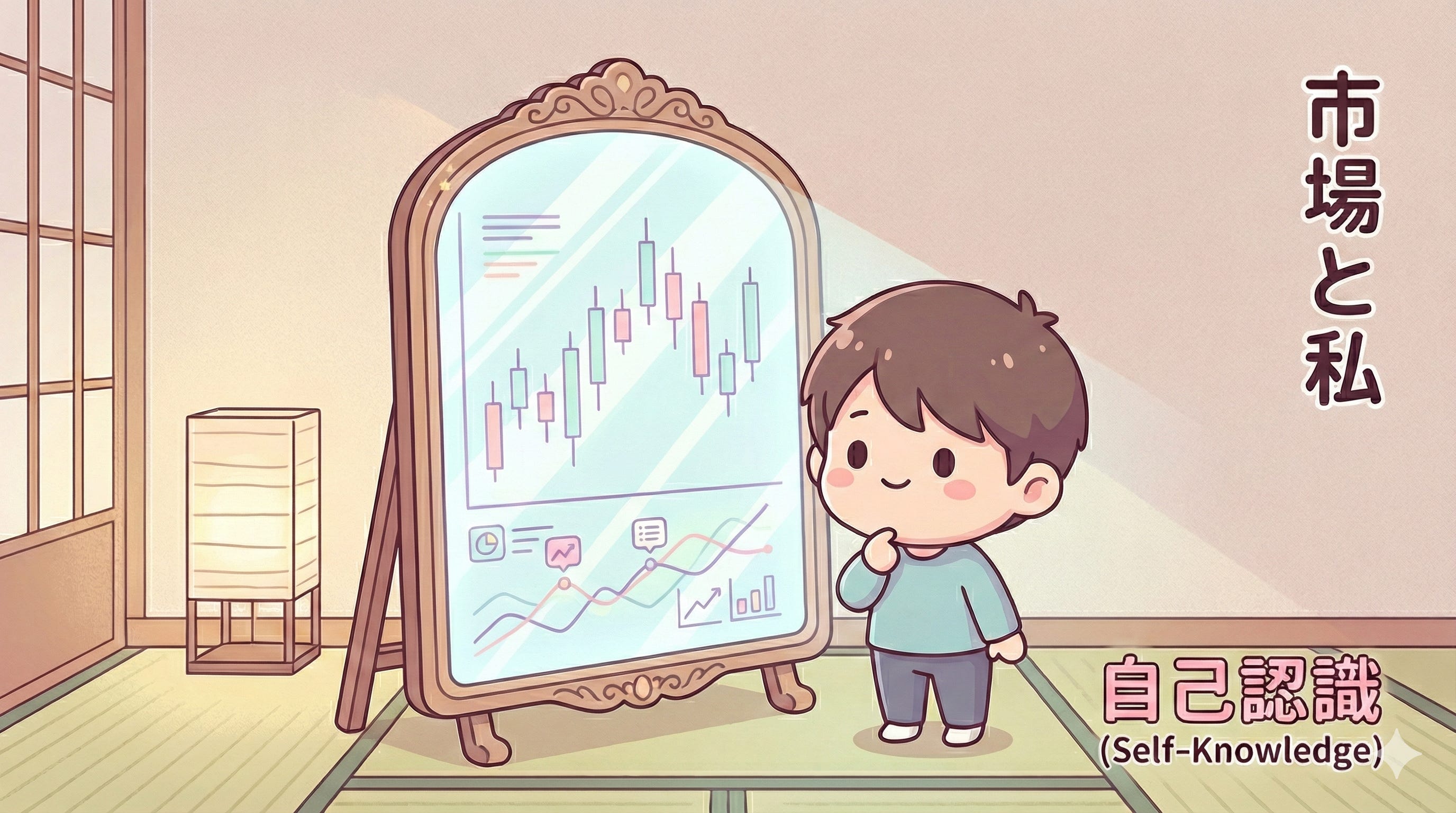
The Market as a Mirror
The market reflects back much more than just P&L.
In drawdowns, you discover your actual risk tolerance, not the theoretical one you put on a questionnaire. In sideways markets, you test your patience. In roaring bull markets, you see if you’re driven by financial goals or by envy of others making money faster than you.
Eventually, you realize that the most important optimization isn’t in your spreadsheet. It’s in your self-perception.
The market doesn’t just price assets. It constantly marks to market our self-knowledge.
Final Thoughts
The market provides the quotes, but the test is always on us.
Prices change every day. Narratives rotate. But what shapes our long-term results is whether we’re honest about what kind of investor we are, and whether we’ve built a framework that allows us to survive the bad times so we can capture the good ones.
My hope is that you find a style that fits who you are, one that lets you stay in the game, sleep at night, and keep compounding.